


A substantial result over time—not a rapid-loss promise.
Retatrutide (Reta) / WEIGHT-LOSS RESULTSRetatrutide (Reta).
Retatrutide (Reta).
Weight-loss results.Retatrutide (Reta)
& weight loss.
Significant weight loss. Published clinical results.
See how much weight participants lost, how long it took, and what the results mean.
25.0%
Average weight reductionAt 80 weeks · highest-dose study group
TRIUMPH-1, 12 mg group; intention-to-treat analysis. Placebo: 3.9%. Source ↗
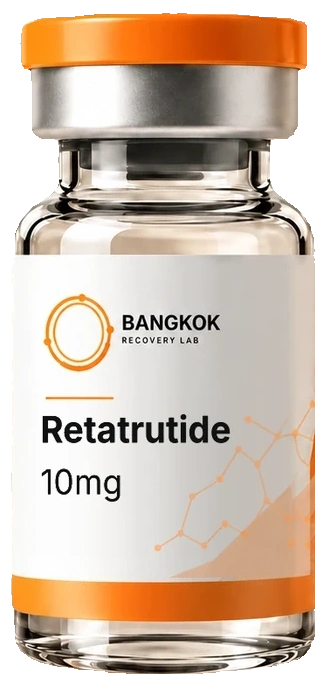
Investigational; not approved. Trial averages are not a promise or evidence for the illustrated vial.
 BANGKOK WEIGHT CARE
TRIUMPH-1 / PHASE 3
The weight-loss results, upfront.
A placebo-controlled phase 3 trial in adults with obesity without diabetes.
Average body-weight reduction
At week 80 · intention-to-treat analysis
Retatrutide (Reta) · 12 mg study group25.0%
Placebo3.9%
The trial randomized 2,339 adults across its study groups. The 12 mg label identifies a trial arm, not instructions for use.
Read the original published study ↗A controlled clinical study, not before-and-after advertising.
Gastrointestinal events were the most common adverse events. Results describe trial groups, not guaranteed outcomes or products supplied outside the trial. Full results ↗
WHAT MAKES IT DIFFERENT
Three receptors. One molecule.
Retatrutide (Reta) is a triple agonist designed to activate GIP, GLP-1 and glucagon receptors.
GIPGLP-1GLUCAGON
That mechanism is why it is being studied for obesity and related conditions. The weight-loss figures above come from the clinical trial—not from a claim about the image on this page.
Official mechanism and approval status ↗GET THE DETAILSYour weight-loss questions.
All guides ↗Your weight-loss questions.
Straight answers.
01WEIGHT-LOSS GUIDE
Retatrutide (Reta) and weight loss: how the triple agonist works
The three-receptor mechanism behind the weight-loss trial results, explained without the jargon.
Read the guide ↗02WEIGHT-LOSS GUIDE
Retatrutide (Reta) weight-loss results: 25.0% at 80 weeks
The reported average, placebo comparison, timeframe and current approval status.
Read the guide ↗BEFORE YOU DRAW CONCLUSIONSHow much?
How much?
How long?
What to expect.
How much weight loss did the trial report?
At 80 weeks, the highest-dose Retatrutide (Reta) group had 25.0% average body-weight reduction, compared with 3.9% for placebo. These are group averages in TRIUMPH-1, not a prediction for an individual.
How long did that result take?
The result was measured after 80 weeks, not a few weeks or a short course. Study participants were monitored in a clinical-trial setting.
Is 25.0% a body-fat percentage?
No. It is the average reduction in total body weight from baseline. It should not be described as a 25-point drop in body-fat percentage.
What side effects were reported?
Gastrointestinal events were the most common adverse events in TRIUMPH-1. Weight-loss results need to be considered alongside tolerability and the continuing safety evaluation.
Is Retatrutide (Reta) approved or sold on this page?
Lilly identifies Retatrutide (Reta) as investigational and not approved for public use. This page explains the evidence; it does not sell or prescribe Retatrutide (Reta).